Sleight of Hand, Sleight of Brand: How Attention Is the Real Magic in Marketing

The Oldest Trick in the Book Is Still Working
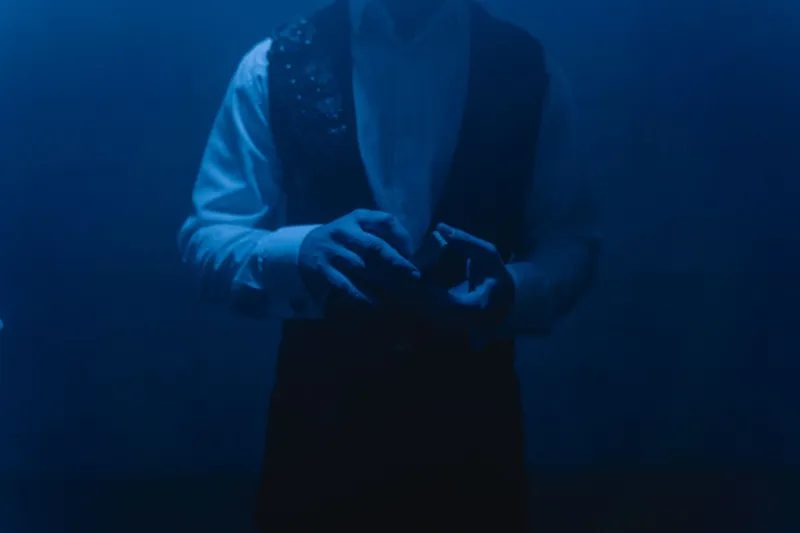
When I'm standing in front of a crowd, the coin in my right hand isn't the point. It never was. The point is that you think the coin is the point. That gap between what's actually happening and what the audience believes is happening — that's where the magic lives.
Now think about the last advertisement that genuinely stopped you mid-scroll. Chances are, it didn't lead with a product. It led with something else entirely — a story, a contradiction, a question that felt uncomfortably personal. You paused. And in that pause, a brand slipped right past your defenses.
Sound familiar? It should. That's misdirection. And it's been working since long before anyone had a social media budget.
What Misdirection Actually Means (It's Not Deception)
Here's where a lot of people get the wrong idea. Misdirection doesn't mean lying. It doesn't mean tricking someone into buying something they don't need or making them feel manipulated after the fact. Done right, it's almost the opposite of that.
In performance magic, misdirection is about guiding attention — leading the audience's focus to where the experience is richest, so the mechanics stay invisible and the wonder stays intact. The goal is a better experience, not a worse one. The audience walks away amazed, not cheated.
Ethical marketing works exactly the same way. You're not hiding a flaw. You're leading with the most compelling part of your story so the audience is engaged enough to hear the rest. The product, the offer, the call-to-action — those are the mechanics. The emotion, the narrative, the unexpected hook — that's your misdirection. And when it works, people don't feel tricked. They feel found.
Timing Is Everything (Seriously, Everything)
One thing that separates a polished performer from someone who just knows a few tricks is timing. You can execute the exact same sleight-of-hand move and get completely different reactions based on when you do it. Too early and people are still orienting themselves. Too late and they've already moved on mentally. The sweet spot is a specific, almost musical beat — and hitting it consistently is a skill that takes years.
Marketers deal with this constantly, even if they don't call it timing. When does your ad appear in someone's feed? At what point in the customer journey does your email land? How long does your hook have to grab attention before someone swipes past?
The brands that figure this out — the ones that show up at the right moment with the right message — feel almost psychic. Spotify Wrapped is a perfect example. It drops every November, right when people are feeling reflective and a little nostalgic heading into the holidays. The data was always there. The timing made it a cultural moment. That's not an accident. That's choreography.
The Pattern Interrupt: Magic's Most Portable Trick
Every magician's toolkit includes something called a pattern interrupt — a moment where the expected sequence breaks and the audience's brain snaps to attention because something didn't go the way it was supposed to.
Your brain is a prediction machine. It's constantly running ahead of reality, building models of what comes next so it can process information efficiently. When something violates that model, you get a spike of attention. You can't help it. It's biological.
Savvy marketers have been exploiting this for years. Dollar Shave Club's launch video opened with a guy walking through a warehouse talking directly to camera with zero corporate polish. In a landscape full of glossy razor ads featuring chiseled athletes and slow-motion water droplets, the pattern interrupt was deafening. People couldn't look away. The video went viral not because of the product — the razors were fine — but because the format was so unexpected it demanded attention.
The lesson here isn't "be weird for the sake of it." It's about understanding what your audience expects and then deliberately, thoughtfully, doing something different. One surprising element. One broken expectation. That's often all it takes.
Reading the Room: Audience Psychology Isn't Optional
Here's something I've learned from decades of performing for live audiences: you cannot do the same show twice and expect the same result. Every crowd has a different energy, a different baseline of skepticism, a different collective mood. The performer who ignores that and just runs through the script is going to lose people by the third act.
Digital marketing has a version of this problem, and most brands handle it poorly. They build one campaign, run it everywhere, and wonder why the numbers are flat. But a 22-year-old in Austin scrolling TikTok at midnight and a 45-year-old in suburban Chicago reading their email over coffee on a Tuesday morning are not the same audience. They don't have the same attention span, the same cultural references, or the same emotional triggers.
The best campaigns treat audience psychology as a living, breathing variable — not a fixed assumption. They test. They iterate. They pay attention to what lands and what dies quietly. That's not just good marketing strategy. That's what every good performer does after every single show.
The Ethics Line Is Real, and It Matters
I want to be clear about something, because it's important to me both as a performer and as someone who thinks a lot about how minds work: there's a line between guiding attention and exploiting it.
A magician who reveals the method behind an illusion doesn't ruin the experience — they often enhance it, because the audience realizes how much craft went into it. A brand that's transparent about what it's doing — that wears its values openly and doesn't hide the seams — earns something more durable than a single conversion. It earns trust.
Misdirection becomes manipulation the moment the audience feels worse after the reveal than they did before it. If someone clicks your ad, buys your product, and then feels deceived — you didn't do magic. You did a con. And cons have a very short shelf life.
The goal is always to leave people better off for having paid attention to you. Amazed, delighted, informed, moved — any of those. Never cheated.
What to Actually Do With This
So if you're a marketer, a creator, or an entrepreneur trying to get people to pay attention in a world that's absolutely saturated with noise, here's the short version:
Lead with something unexpected. Your hook should violate at least one expectation your audience walks in with.
Master your timing. Know when your audience is most receptive and show up then — not just when it's convenient for you.
Study your audience like a performer studies a crowd. What do they already believe? What do they fear? What delights them? Build from that.
Keep the mechanics invisible. The product, the offer, the CTA — those are the coin in the right hand. Lead with the story.
And always, always leave them better off than you found them.
That's the real trick. And it never gets old.