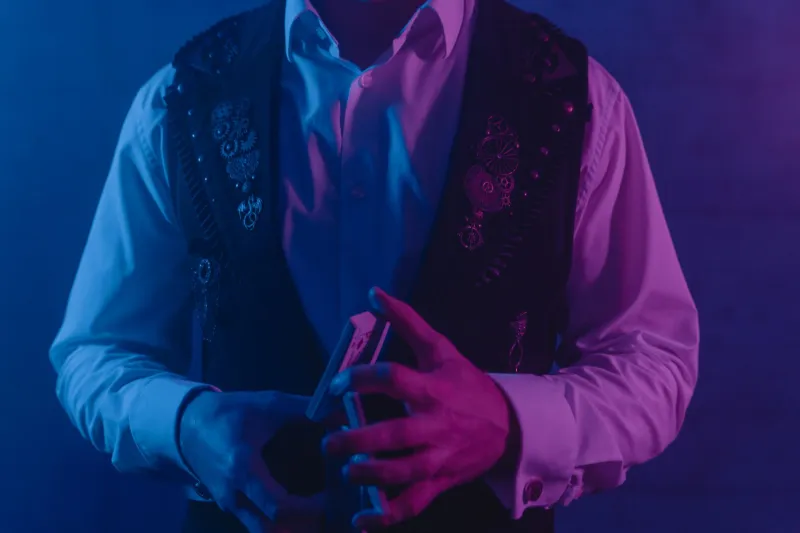
The Danger of Showing Everything: How Radical Transparency Can Quietly Destroy Your Art
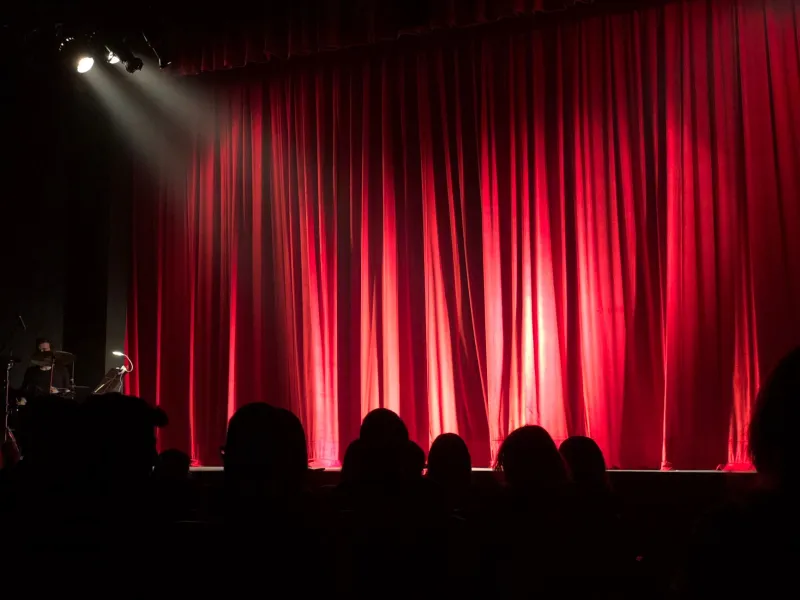
The Curtain Exists for a Reason
I've spent a long time thinking about what makes a moment of wonder actually work. Not just technically — anyone can learn a sleight of hand with enough practice — but emotionally. What makes a person in the third row lean forward, mouth open, completely convinced that what they just saw was impossible?
The answer isn't skill alone. It's architecture. It's the careful construction of what you don't show.
That's something the current creative culture has largely forgotten. We're living through what you might call the Great Demystification — a cultural moment where the dominant advice to artists, entrepreneurs, and creators is to document everything, share your process obsessively, and perform your vulnerability for an audience at every step. And honestly? For a while, it worked. Audiences loved the access. The "day in the life" content, the raw sketchbooks, the bloopers reel — it all felt refreshing after decades of polished, untouchable celebrity.
But something strange happened along the way. The more everyone showed, the less anything felt special.
What Illusion Psychology Actually Tells Us About Attention
Here's a concept worth sitting with: in the world of illusion, there's a principle called selective revelation. It's the idea that what you choose to withhold from an audience shapes their perception of everything you do show them. A magician who explains every method before performing it doesn't become more respected — they become irrelevant. The explanation collapses the experience before it can begin.
Neuroscientists have a related concept: the brain is fundamentally a prediction machine. It's constantly generating expectations and then measuring reality against them. When reality matches the prediction, the brain barely registers it. But when reality violates a prediction — when something genuinely surprises the perceptual system — the brain lights up. Dopamine. Attention. Memory encoding. The whole reward circuit fires.
Mystery creates the conditions for that violation. When you show everything upfront, you hand the audience a complete map. And nobody gets excited about territory they've already charted.
The Behind-the-Scenes Trap
Let me be specific about what I mean, because I'm not arguing that process content is worthless — it isn't. The trap isn't transparency itself. The trap is undifferentiated transparency. It's the assumption that more access always equals more connection.
Think about the last time you watched a behind-the-scenes documentary about a movie you loved. There's a decent chance it made the film feel slightly smaller afterward. You saw the green screen, the squabbling on set, the director's uncertainty. The magic didn't disappear entirely, but it got a little harder to access. The experience became explained.
Now think about a piece of art, a performance, or even a conversation that left you genuinely stunned — the kind of stunned where you kept turning it over in your mind for days. Chances are good that experience had edges you couldn't quite see around. It left gaps that your imagination filled in with something richer than any making-of feature could have provided.
That's not an accident. That's design.
What Selective Mystery Actually Looks Like in Practice
So what does this mean practically for creators? It means developing a genuine editorial sensibility about what you share — and more importantly, when and why you share it.
A few principles worth considering:
Share outcomes more than methods, at least initially. Let the work land before you explain how it was made. The explanation can come later, in a different context, for an audience specifically interested in craft. But the first encounter should be the experience itself, not the instruction manual.
Protect the moment of surprise. If you're working on something genuinely new or unexpected, resist the urge to preview it exhaustively. Teasers that reveal too much aren't teasers — they're spoilers. There's a reason good trailers leave questions unanswered.
Distinguish between process sharing and process dumping. Showing your sketchbook can be intimate and compelling. Showing every single sketch, including the ones that went nowhere, in real time, with commentary — that's noise. Curation is not dishonesty. It's respect for your audience's attention.
Let some things remain unexplained. Not everything needs a caption. Not every creative choice needs a justification thread. Some of the most powerful work in any medium is powerful precisely because it resists easy explanation. Protect that resistance.
The Paradox at the Heart of Wonder
Here's the thing that took me a long time to fully accept: withholding isn't the same as hiding. There's a difference between strategic mystery and deception, between editorial selectivity and inauthenticity.
A magician who guards a method isn't lying to the audience. They're preserving the possibility of genuine experience. That's a gift, not a con.
The same logic applies to any creative work. When you share selectively — when you make conscious choices about what to reveal and what to keep close — you're not being coy or manipulative. You're acknowledging that the audience's experience of your work is something worth protecting. You're treating wonder as a resource that can be depleted if you're not careful with it.
In a content landscape that rewards constant output and total transparency, that kind of restraint is genuinely countercultural. It takes confidence to hold something back. It takes trust in the work itself — trust that the finished thing is worth more than the accumulated documentation of how you got there.
The Question Worth Asking
The next time you're about to post the rough draft, the unfinished sketch, the candid breakdown of your creative doubts — pause for just a second and ask yourself one question: Am I sharing this because it adds to the experience, or because I'm anxious about the silence?
Anxiety is a terrible editorial director. It'll have you publishing everything just to feel like you're doing something.
But real creative power — the kind that makes audiences lean forward, that makes work stick in memory long after the moment has passed — that comes from knowing exactly which curtain to lift, and which ones to leave closed.
The mystery isn't the obstacle. The mystery is the point.