Why Keeping Some Things Unknown Is the Most Radical Thing You Can Do Right Now
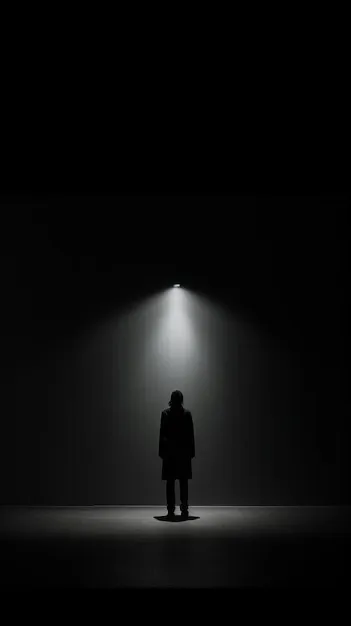
Photo: person standing in wonder looking at mysterious light in dark room, via img.freepik.com
The Answer Machine We Built and Now Can't Escape
Think about the last time you didn't know something and just... sat with it. Didn't reach for your phone. Didn't ask a voice assistant. Just let the question hang in the air like smoke.
Can't remember? That's kind of the point.
We've engineered mystery out of daily life with almost surgical precision. Every song you half-remember gets identified in four seconds. Every unfamiliar face gets reverse-image-searched. Every weird symptom gets diagnosed before you've even finished describing it. We built the most powerful answer machine in human history, put it in our pockets, and now we walk around wondering why nothing feels surprising anymore.
Here's what I've come to believe after decades of building illusions and watching audiences react to them: mystery isn't just entertainment. It's nutrition. And we are deeply, quietly starving.
The Moment Before the Reveal Is the Whole Thing
Anyone who's ever watched a great magic act knows the feeling I'm talking about. It's not the moment the coin reappears or the card shows up in the impossible location. It's the moment before — that suspended fraction of a second where your brain is running every explanation it has and coming up empty. That's the moment. That's where the electricity lives.
Neuroscientists have a name for what happens in that gap. They call it a "prediction error" — your brain expected one thing, got another, and now it's scrambling. That scramble releases dopamine. It sharpens attention. It makes you feel, briefly, like a kid again.
But here's the thing nobody talks about: you can't manufacture that feeling if you've already looked up the trick on YouTube. The infrastructure of wonder requires not-knowing. And not-knowing has become almost countercultural.
When I'm putting together a new illusion, the hardest part isn't the mechanics. It's preserving the audience's virginity — their clean, unpolluted experience of encountering something they genuinely cannot explain. That's getting harder every year. And it's made me think a lot about what mystery actually costs us when we lose it.
Information Overload Is a Wonder Killer
There's a specific kind of exhaustion that comes from too much information. Not tiredness, exactly — more like a dullness. A flatness. You've seen the algorithm serve you content for so long that you can practically predict what's coming next. The surprise has been optimized away.
This isn't just a personal annoyance. It's a cultural crisis.
Research out of UC Berkeley has shown that awe — that specific feeling of encountering something vast and beyond your current understanding — has measurable effects on mental health. It reduces inflammation markers. It shifts your sense of self from small and anxious to connected and expansive. It makes you more generous, more patient, more creative.
And awe, by definition, requires the presence of something you don't fully understand.
When we strip mystery from every experience — when we explain the magic before it's performed, when we spoil the ending, when we demand full transparency from every artist and every institution — we're not just losing entertainment value. We're cutting ourselves off from a physiological and psychological resource that we genuinely need.
Mystery as Rebellion
Here's where it gets interesting for anyone who makes things for a living.
In a world of radical transparency, withholding becomes a power move. Not in a manipulative way — I'm not talking about deception for its own sake. I'm talking about the deliberate, thoughtful preservation of space between what you show and what you know.
The best artists I've encountered over the years — painters, musicians, writers, performers — they all do this instinctively. They give you enough to pull you in and then they leave a door open. They resist the urge to explain. They trust the audience to sit in the discomfort of not-quite-understanding, because they know that discomfort is where the real engagement happens.
That's increasingly rare. Social media has trained creators to over-explain, to show their process constantly, to make everything accessible and digestible. And look, there's real value in that transparency. But there's also something being lost when every painting comes with a making-of video and every song drops with a line-by-line breakdown of what the lyrics mean.
Some things should stay slightly out of reach. Not to be elitist. Not to gatekeep. But because the reaching is the point.
What You Can Actually Do About This
If you're a creator — in any medium, at any level — I'd push you to think seriously about where you're leaving room for wonder in your work.
Are you over-explaining? A lot of us do this out of insecurity. We're afraid that if we don't spell it out, people won't get it. But the audience is smarter than we give them credit for, and they find more meaning in what they have to work for.
Are you finishing every thought? Some of the most powerful moments in any performance, any piece of writing, any conversation, come from the thing that isn't said. The pause. The space. The question left open.
Are you letting yourself not-know? This one's personal. I've found that my best creative work happens when I start from genuine curiosity rather than a predetermined answer. When I'm actually exploring rather than demonstrating. That energy is palpable, and audiences feel it.
And if you're not a creator — if you're just a person trying to live a life that doesn't feel completely flattened by information — try this: the next time you have a question, give yourself ten minutes before you look it up. Just wonder about it. Let your brain run its wild, improbable guesses. Sit in the not-knowing.
It'll feel uncomfortable. Do it anyway.
The Gift of the Unanswered Question
I've spent most of my life in the business of controlled mystery. Building situations where people encounter the impossible and have to reckon with the limits of what they understand. And what I've learned — what the audiences have taught me, year after year — is that people aren't just tolerating the mystery. They're grateful for it.
In a world that's always ready with an answer, the gift of a genuine question is increasingly precious.
Wonder isn't naive. It isn't childish. It isn't something you outgrow when you get smart enough. It's a sophisticated, disciplined response to the actual complexity of the world — a refusal to reduce everything to what's already known.
The magician's job, ultimately, isn't to fool people. It's to remind them that the world is stranger and richer than they've been led to believe. That not every door needs to be opened. That some of the most important things in a human life — love, meaning, creativity, awe — live precisely in the territory that can't be fully explained.
Keep some of that territory wild. It's worth more than you think.