The Unspoken Deal: What Your Audience Is Actually Asking For When They Show Up
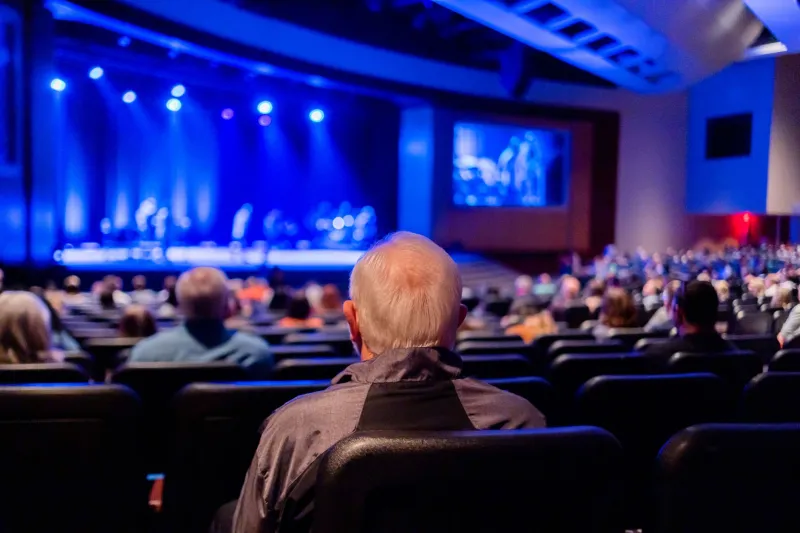
Somewhere in the middle of a performance — not at the beginning, not at the climactic moment, but somewhere unremarkable in the middle — there's a beat where the audience makes a decision.
They decide whether they're with you.
Not whether they're entertained. Not whether they think you're technically skilled. Whether they're with you. Whether they're going to let themselves be in this thing together with you, or whether they're going to keep one foot outside it, watching from a safe analytical distance.
Everything else — the technique, the storytelling, the pacing, the production value — is in service of that one quiet decision. And most creators never think about it directly, which is why so much good, technically accomplished work lands without really landing.
What People Say They Want vs. What They Actually Come For
Ask someone why they're going to a magic show and they'll say something like "it looks fun" or "I heard it's impressive." Ask them afterward what made it memorable and they'll tell you something different — something about a feeling. Surprise, yes, but also something warmer. Something closer to permission.
That's the word I keep coming back to. Permission.
Audiences, across nearly every creative medium, are looking for permission to feel something they don't normally let themselves feel. Permission to be delighted without being self-conscious about it. Permission to be moved without it feeling manipulative. Permission to believe something they intellectually know isn't real — and to enjoy that belief without shame.
This is why the audience contract is fundamentally different from a transaction. You're not selling a product or a service. You're offering a temporary suspension of the usual rules. And the implicit promise you're making is: I will hold this space carefully. I will not abuse the trust you're extending.
When that promise gets broken — even subtly — audiences feel it immediately. They don't always know what happened, but they pull back. The foot goes outside the circle. The spell breaks.
The Three Things Audiences Are Actually Seeking
I've thought about this for a long time, and I keep landing on three core things that sit underneath the stated reason anyone shows up for creative work.
The first is comfort in uncertainty. This sounds paradoxical, but it's real. People are drawn to magic, to great storytelling, to genuinely surprising art, because it demonstrates that the world contains more than they can explain — and somehow that's reassuring rather than frightening. When something impossible happens in front of you and you don't know how, and that's okay, it's a kind of relief. Not everything needs to be understood. Not everything needs to be controlled. There's permission in the inexplicable.
The second is conspiracy. Not in the dark sense, but in the original sense of the word — breathing together. Audiences want to feel like they're in on something. Even when they don't know the secret, they want to feel like they're part of a shared experience that not everyone gets. The performer and the audience are co-creating something that only exists in that room, at that moment. That feeling of mutual participation, of being included in something, is deeply satisfying in a way that passive consumption never quite matches.
The third is a reflection of their own capacity for wonder. This is the one that catches people off guard when I say it. When an audience is genuinely amazed, part of what they're feeling is about themselves — about the fact that they can still be amazed. In a culture that rewards cynicism and sophistication, the experience of genuine wonder is almost countercultural. A great performance gives people evidence that they haven't become too old or too smart or too jaded to feel it. That's a gift.
How This Changes the Way You Make Things
If you're a creator of any kind — performer, writer, designer, entrepreneur with a brand story to tell — this reframe has practical consequences.
It means your first job is not to impress your audience. It's to make them feel safe enough to participate. Impressiveness, pursued directly, creates distance. It puts the audience in the position of evaluating rather than experiencing. The best work I've ever seen — in any medium — doesn't lead with how good it is. It leads with an invitation.
It means the moments of connection in your work matter more than the moments of virtuosity. The pause where you let the audience catch up. The acknowledgment that you're both in on something. The choice to be a little vulnerable instead of a little invulnerable. These are not soft considerations. They're structural ones.
It also means that honoring the contract doesn't require hiding your craft. This is a misconception I see a lot — the idea that mystery requires withholding, that the audience can only be enchanted if they're kept in the dark. In my experience, the opposite is often true. When you let people see that something is genuinely difficult, genuinely made with care, genuinely the result of years of work — they lean in rather than pull back. The craft itself becomes part of the wonder.
The Contract You Might Be Breaking Without Knowing It
The most common way I see creators violate the unspoken deal isn't through dishonesty or cynicism. It's through indifference to the experience of being in the audience.
It's the work that's made entirely from the inside, from the creator's perspective, without ever genuinely asking what it feels like to encounter it cold. It's the performance that's technically flawless and emotionally inert. It's the brand story that's coherent and polished and somehow leaves you feeling nothing.
The audience forgives a lot. They forgive imperfection, they forgive rough edges, they forgive the seams showing. What they don't forgive — and what they can't articulate, but feel instantly — is the sense that the person on the other side of the work didn't really care whether they showed up or not.
Care is the contract. Everything else is craft.
And craft without care is just a trick with nobody watching.